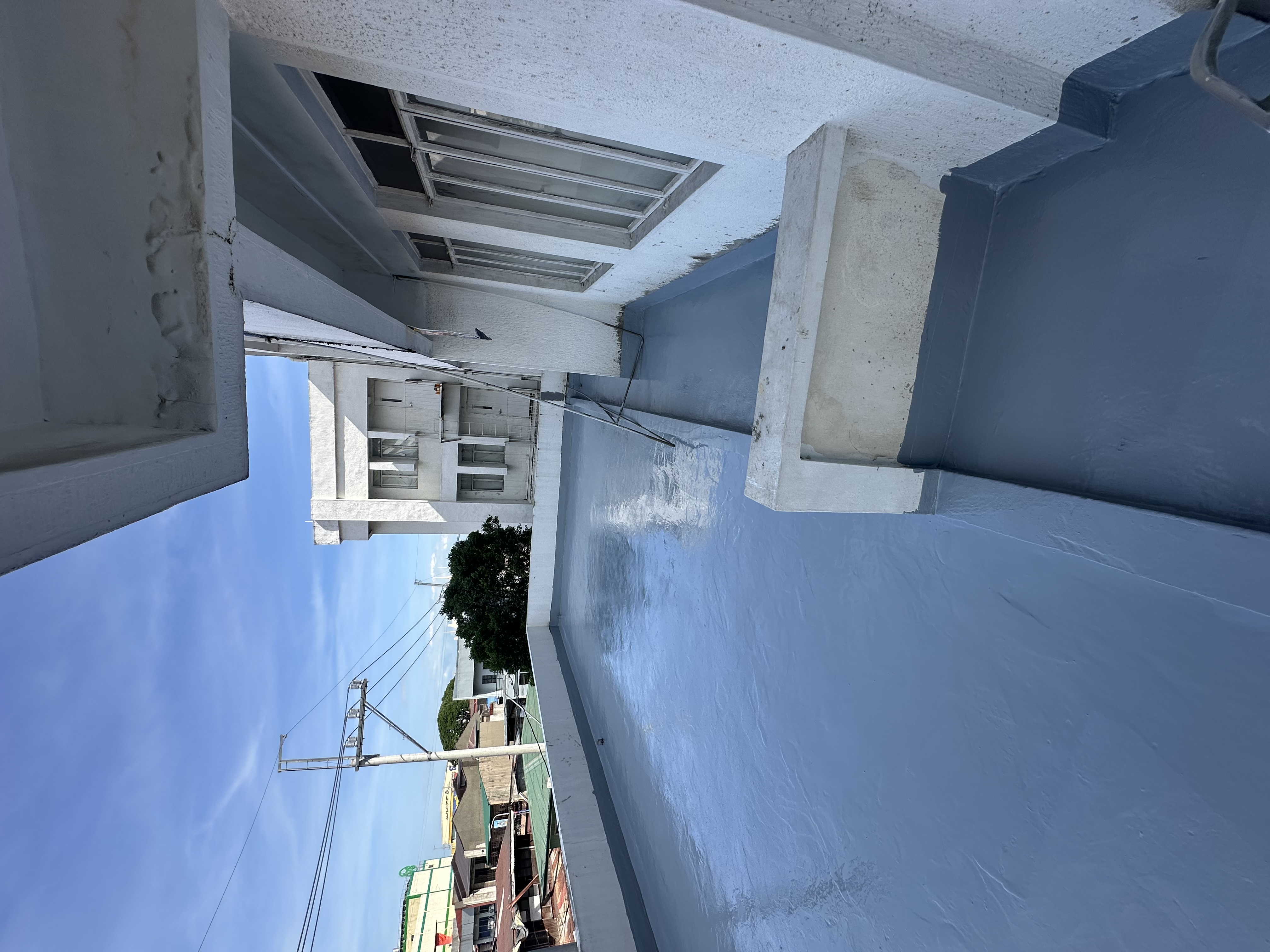
Watch how the membrane is prepared and sprayed on site, from bare surface to finished, flood-tested membrane.
The surface is cleared, cleaned and prepared so the primer bonds properly — this step decides how well everything after it holds.
Primer goes down first, then the polyurea membrane is sprayed on as a single, seamless, continuous layer — no joints, no seams.
A protective topcoat is applied, and the area is flood-tested before hand-over, so you know it holds before we leave site.
A primer formulated with acidic compounds and zinc. The acid gently etches the surface while zinc penetrates the substrate, forming physical and chemical bonds that resist corrosion.
A crack-penetrating repair agent restores internal defects before the coating goes on — addressing structural issues a surface coating alone can't fix.
A three-step process: an adhesive and surface treatment to eliminate pores, a specialized primer for chemical bonding strength, then the topcoat for a durable, well-adhered finish.
Archi Shield also bonds to marble, tile, glass, ceramic, urethane foam, PVC, wood, styrofoam, sandwich panels, plastic, and gypsum board — each with its own compatible primer.
The foundational structure — repaired and leveled first if needed.
An adhesion-promoting layer bonding the substrate to the Archi Shield coating.
The core waterproofing and protective layer — durable and fast-curing.
Optional UV-resistant, color-protective finish for surfaces exposed to sunlight or weathering.
High-capacity spray equipment for large-scale projects.
Powers every machine on-site.
A consistent, reliable source of compressed air.
Carries every piece of equipment and material needed for the job.
The membrane cures fast — the area is typically back in service in as little as 24 hours, with no cracking across a wide temperature range.